
The Postnatal Reset: 6 Simple, Quick Exercises to Rebuild Your Core and Pelvic Floor Amidst the Chaos of Motherhood
Bringing a new life into the world is one of the most profound, beautiful experiences a person can go through. However, the physical toll it takes on the maternal body is immense. For nine months, your body stretches, shifts, and adapts to support your growing baby. After birth, society often expects mothers to magically „bounce back,“ but the reality of postpartum life is far more complex. Between round-the-clock feedings, sleep deprivation, and the endless cycle of household chores, finding a spare hour for a traditional gym workout is virtually impossible.
More importantly, traditional high-intensity workouts or standard abdominal exercises (like heavy crunches or planks) can actually do more harm than good in the early postpartum months. They can put excessive downward pressure on a recovering pelvic floor and exacerbate diastasis recti (the separation of the outermost abdominal muscles).
The good news? You do not need a gym membership, expensive equipment, or a dedicated hour of silence to heal your body.
True postnatal recovery is about micro-habits—weaving gentle, purposeful movement into the natural flow of your day. Whether you are rocking a crying baby to sleep, waiting for the kettle to boil, or folding tiny clothes, you can rebuild your foundation from the inside out using these 6 quick, easy exercises.
Part 1: Reconnecting with the Deep Core
Before you can safely strengthen outer muscles, you must reawaken your internal system.
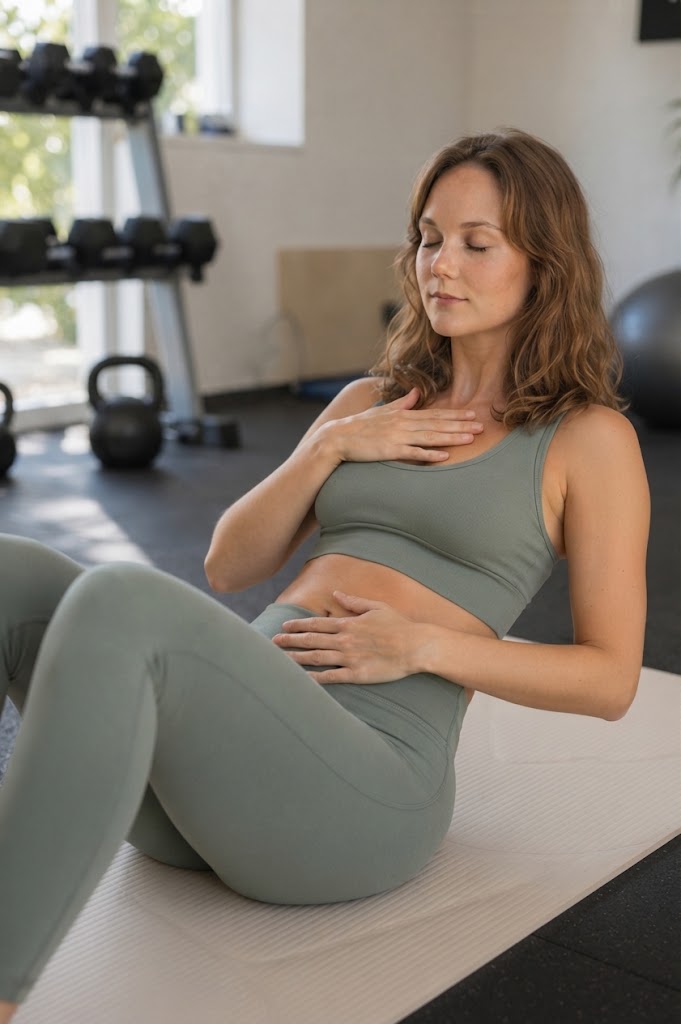
1. Diaphragmatic Breathing with Pelvic Floor Integration
Breathing sounds too simple, but improper breathing patterns post-birth can trap pressure in the abdomen.
- How to Do It: Lie on your back with your knees bent, or sit comfortably in a nursing chair. Place one hand on your chest and the other on your lower belly. Inhale slowly through your nose, letting your belly expand outward while your pelvic floor relaxes and opens. Exhale gently through pursed lips, drawing your lower belly in toward your spine and simultaneously lifting your pelvic floor (imagine stopping the flow of urine) .
- The Routine: 10 slow, deep breaths, 2 to 3 times a day.
- Everyday Tip: Practice this every time you sit down to nurse or bottle-feed your baby.
2. Transverse Abdominis (TVA) „Zips“
This replaces the traditional crunch and directly targets diastasis recti by narrowing the waistline from the inside.
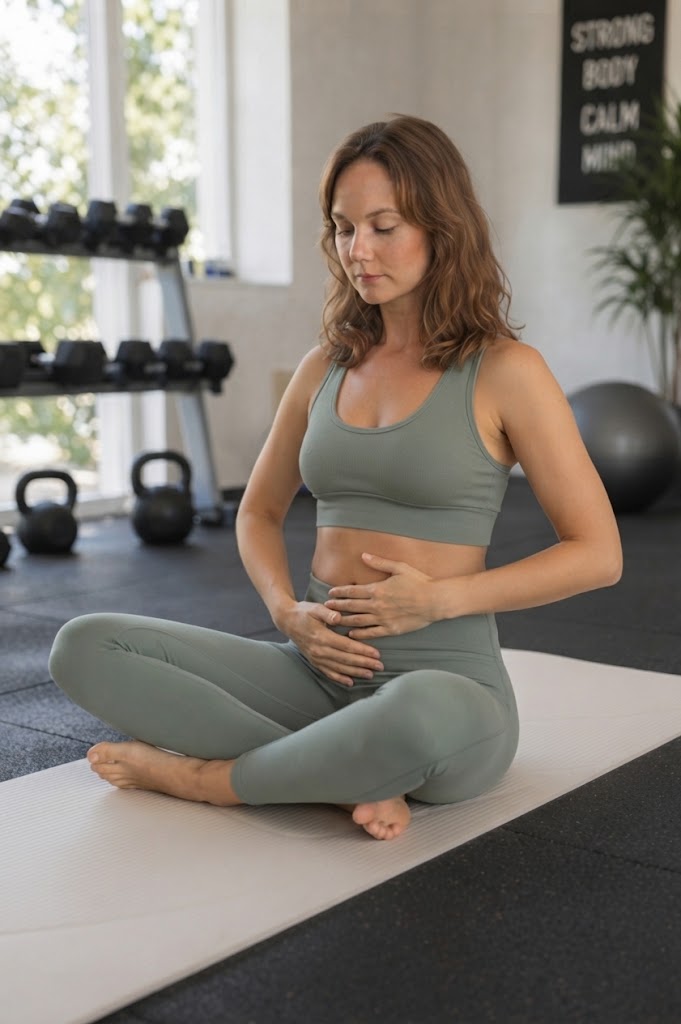
- How to Do It: Sit tall or lie on your back. Take a regular breath in. As you exhale, imagine wearing a tight pair of high-waisted jeans and gently drawing a zipper up from your pubic bone to your belly button. Flatten your lower belly inward rather than pushing it out.
- The Routine: Hold the gentle contraction for 5 to 8 seconds while breathing shallowly, then release. Repeat 10 times.
- Everyday Tip: Do this while washing dishes at the kitchen sink or standing in line at the grocery store.
Part 2: Restoring Stability & Lower Body Strength
Carrying a baby shifts your center of gravity forward for months. Once your deep core is firing, you need to wake up your glutes.
3. Glute Bridges for Lower Back Relief
Your glutes often „fall asleep“ during pregnancy. Bridges safely strengthen the backside without stressing the abdominal wall.
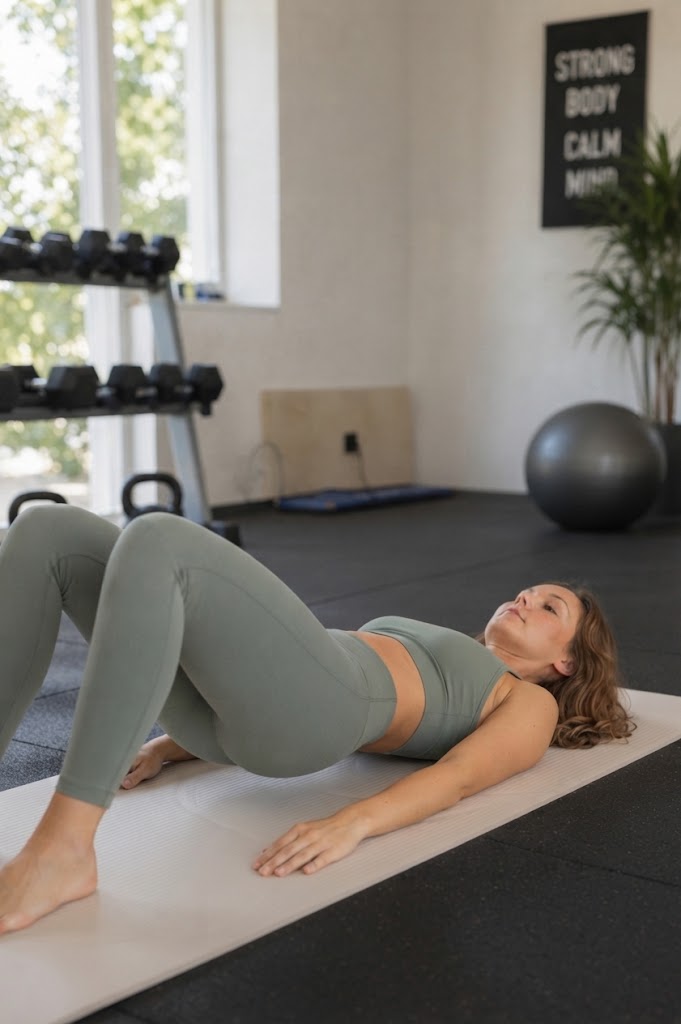
- How to Do It: Lie on your back with your knees bent and feet flat on the floor, hip-width apart. Engage your pelvic floor and glutes, and press through your heels to lift your hips toward the ceiling until your body forms a straight line from shoulders to knees . Hold for 2–3 seconds, then slowly lower down.
- The Routine: 2 sets of 10 to 12 repetitions.
- Everyday Tip: Place your baby’s play mat on the floor and do your glute bridges right beside them during tummy time.
4. Modified Clamshells for Hip Stability
Pelvic girdle pain and hip instability are extremely common postpartum. Clamshells target the muscles that stabilize your pelvis when walking.
- How to Do It: Lie on your side with your knees bent at a 90-degree angle and hips stacked. Keeping your feet glued together, slowly lift your top knee open like a clamshell without letting your hip roll backward.
- The Routine: 12 to 15 reps on each side.
- Everyday Tip: Do a quick set on your side right before getting out of bed in the morning.
Part 3: Upper Body Relief for Nursing Mums
The constant „C-shape“ posture of breastfeeding and holding a baby leads to tight chests and upper back pain („mum posture“).
5. Wall Push-Ups for Upper Body Strength
Floor push-ups are too intense early on, but wall push-ups allow you to control the load while protecting your core.
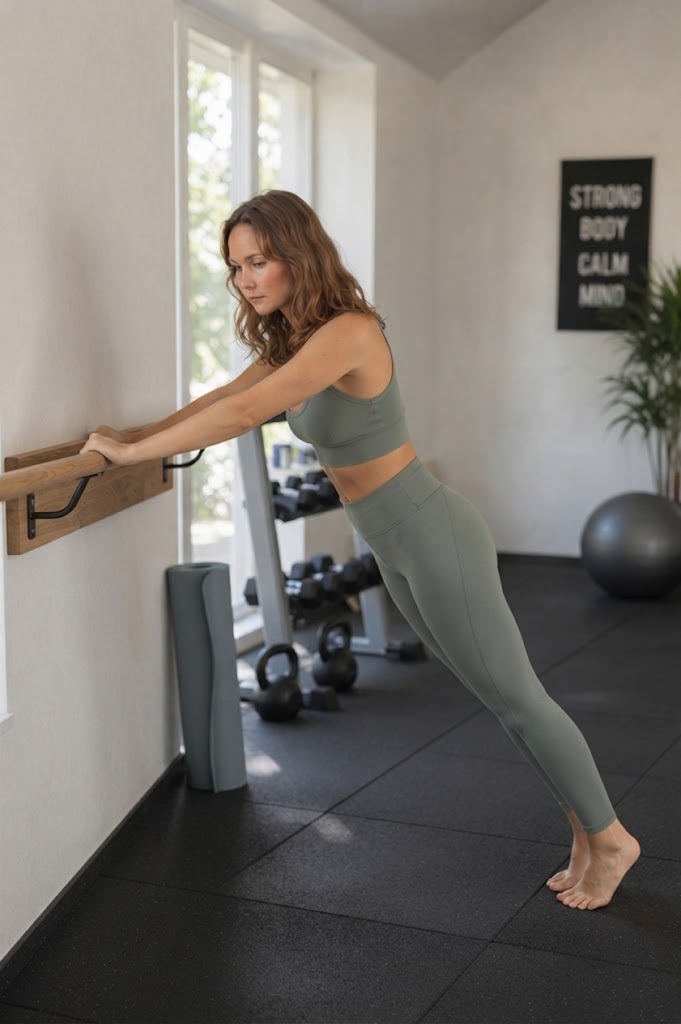
- How to Do It: Stand facing a wall, about an arm’s length away. Place your hands flat on the wall at shoulder height. Keeping your body in a straight line and core braced, bend your elbows to bring your chest toward the wall, then push firmly back .
- The Routine: 10 to 12 smooth repetitions.
- Everyday Tip: Knock out a set while waiting for the microwave or bottle warmer.
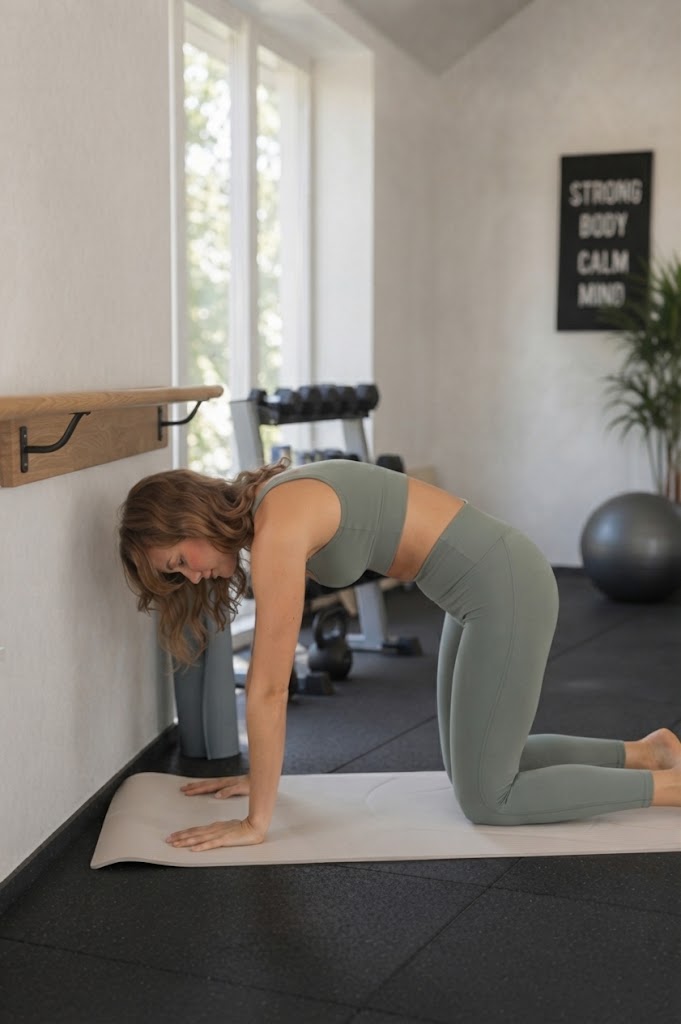
6. Cat-Cow Stretch for Spine Mobility
This is the ultimate antidote to upper back stiffness caused by holding a baby all day long.
- How to Do It: Start on your hands and knees (tabletop position) with wrists under shoulders and knees under hips. Inhale as you drop your belly toward the floor and look up (Cow). Exhale as you round your spine toward the ceiling, tucking your chin and drawing your belly in (Cat) .
- The Routine: Flow fluidly between the two positions 8 to 10 times.
- Everyday Tip: Use this as a morning wake-up stretch or right before bed to release tension.
Summary: Your Quick Reference Guide
| Number & Exercise | Primary Focus | Best Time in Daily Routine |
| 1. Diaphragmatic Breathing | Pelvic Floor / Nervous System | While nursing or feeding |
| 2. TVA Zips | Deep Core / Diastasis Healing | Washing dishes / brushing teeth |
| 3. Glute Bridges | Glutes / Lower Back | During baby’s floor time |
| 4. Modified Clamshells | Hip Stability | First thing in the morning |
| 5. Wall Push-Ups | Upper Body Posture | Waiting for the microwave |
| 6. Cat-Cow Stretch | Spine Mobility / Tension Relief | Morning or right before sleep |
Important Note: Always listen to your body, avoid any exercise that causes pain or doming of the stomach, and check with your doctor, midwife, or a pelvic floor physical therapist before starting a new routine after childbirth.