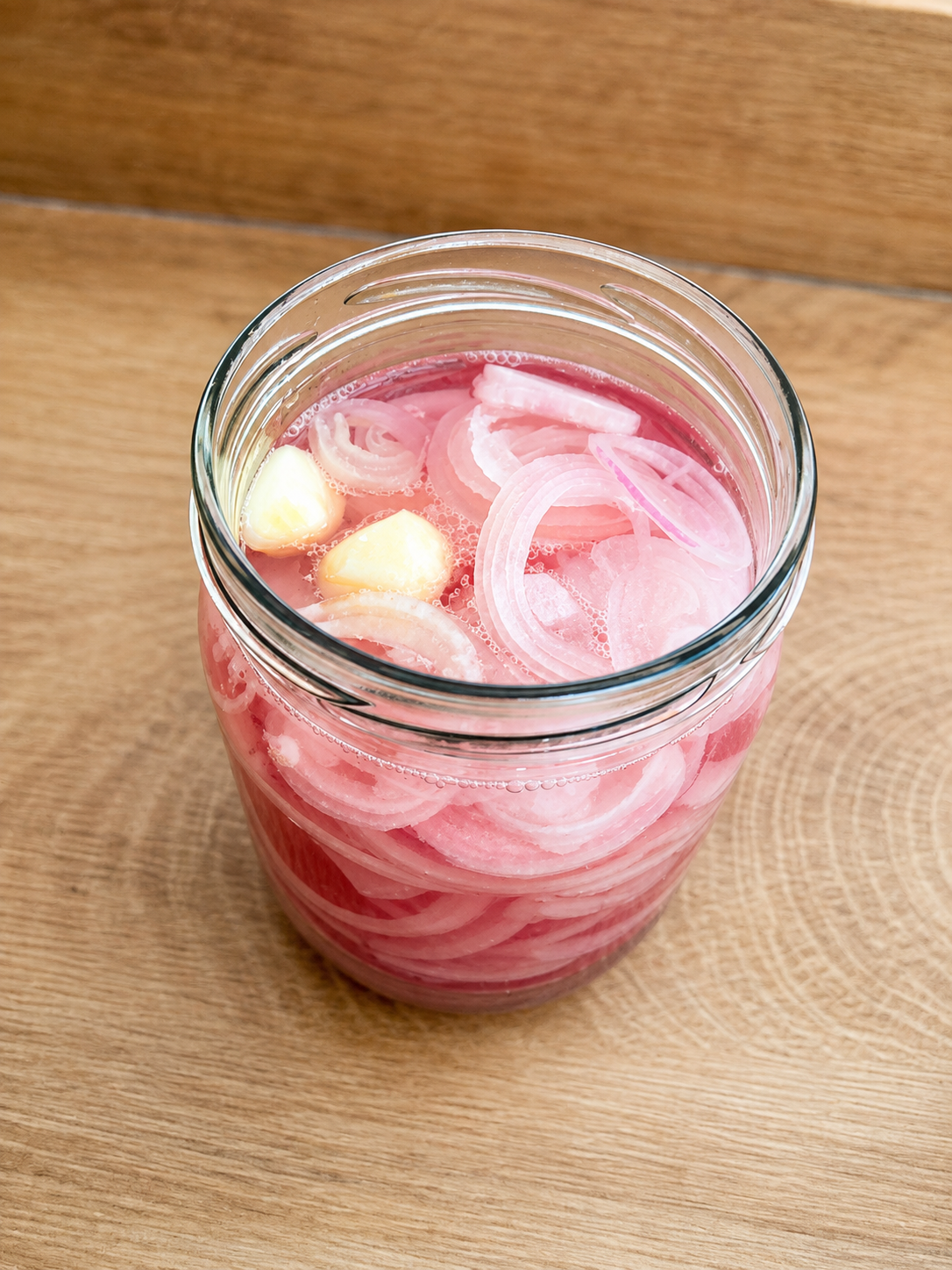
Fermented Red Onions: The Easy Gut-Friendly Recipe You’ll Want to Make Again and Again
If you have never made fermented red onions before, you might be surprised by how simple the process actually is.
All you need are a few basic ingredients, a clean glass jar and a little patience. There is no vinegar, no complicated equipment and no need for special fermentation starters. The natural bacteria already present on fresh vegetables do the work for you.
The result is something completely different from traditional pickled onions: crisp, tangy, slightly salty and naturally sour, with a deeper flavor that gets better as it ferments.
And once you have a jar of fermented red onions in your refrigerator, you will probably find yourself adding them to everything from avocado toast and salads to sandwiches, grain bowls, eggs and grilled vegetables.
But there is another reason fermented onions are so interesting. Onions themselves are incredibly nutritious, but some people find raw onions difficult to digest. They contain fructans, a type of fermentable carbohydrate that can cause bloating, gas and abdominal discomfort in sensitive people. Fermentation changes the food and its microbial environment, although it does not guarantee that onions will become easier to tolerate for everyone.
So let’s look at what makes onions so special, why raw onions can sometimes be difficult to digest, how lacto-fermentation works, and how to make your own fermented red onions at home.
What Are Fermented Red Onions?
Fermented red onions are onions that have been preserved through lacto-fermentation.
Despite the name, this process does not involve dairy.
„Lacto“ refers to lactic acid bacteria. These naturally occurring microorganisms use carbohydrates in the vegetables and produce lactic acid as they grow. The increasing acidity gives fermented vegetables their characteristic tangy flavor and helps create an environment in which many undesirable microorganisms cannot thrive.
This is different from quick-pickled onions.
Quick-pickled onions are usually covered with vinegar, often together with sugar, salt and spices. Fermented onions, on the other hand, develop their acidity naturally through microbial fermentation.
That means the flavor is more complex, slightly funky and wonderfully savory.
And because the vegetables are not cooked, a properly fermented product can also contain living microorganisms. However, it is important not to automatically call every fermented food a „probiotic.“ Fermented foods may contain live microorganisms, but they do not necessarily contain clinically demonstrated probiotic strains in defined amounts.
Why Are Onions So Good for You?
Onions are much more than a flavor ingredient.
They belong to the allium family, together with garlic, leeks, shallots and spring onions. This group of vegetables contains a variety of sulfur-containing compounds and plant polyphenols that have attracted considerable scientific interest.
Red onions are particularly interesting because their deep color comes from anthocyanins, a group of plant pigments with antioxidant properties.
Onions also provide:
- vitamin C
- folate
- potassium
- fiber
- polyphenols
- sulfur-containing compounds
- naturally occurring prebiotic carbohydrates
One of the best-known onion compounds is quercetin, a flavonoid that has antioxidant and anti-inflammatory properties.
Onions also contain fructans, which are carbohydrates that can act as a food source for beneficial gut bacteria.
This is one reason onions can be part of a healthy, fiber-rich diet.
But it is also one reason some people don’t feel particularly good after eating them.
Why Do Raw Onions Sometimes Cause Bloating?
This is where things get interesting.
Have you ever eaten a large amount of raw onion and later felt bloated, gassy or uncomfortable?
You are definitely not alone.
Onions and garlic are naturally rich in fructans. Fructans belong to the FODMAP family of carbohydrates. They are not completely absorbed in the small intestine and eventually reach the large intestine, where gut bacteria ferment them.
For most people, this is simply a normal part of digestion.
For people with a particularly sensitive digestive system, however, the resulting gas and movement of water in the intestine can contribute to bloating, abdominal pain and changes in bowel habits. This is particularly relevant for people with IBS.
Raw onions can be particularly noticeable because they are often eaten in relatively large amounts and have a strong concentration of these fermentable carbohydrates.
So while onions are nutritious, more is not necessarily better.
Sometimes the way you prepare a food matters just as much as the food itself.
Does Fermentation Make Onions Easier to Digest?
Possibly — but this is an area where it is important not to overpromise.
Fermentation changes the food matrix and the compounds present in the vegetable. During lacto-fermentation, microorganisms metabolize some of the available carbohydrates and produce organic acids and other compounds. Research into fermented vegetables has identified changes in bioactive compounds and microbial populations, and fermented foods are being studied for their possible effects on gastrointestinal health.
However, we cannot say that fermenting onions automatically removes all of their fructans or makes them suitable for everyone with digestive sensitivities.
Individual tolerance varies.
If you are sensitive to onions, start with a very small portion — perhaps one teaspoon — and see how your body responds.
And if you are following a medically recommended low-FODMAP diet, fermented onions should not be considered automatically safe simply because they have been fermented.
Why I Love Fermented Red Onions
For me, the biggest advantage is actually how easy they are to use.
You make one jar and suddenly have a ready-to-use flavor booster in the refrigerator.
They add:
- acidity
- crunch
- freshness
- saltiness
- a little sweetness
- beautiful color
And they can turn a very simple meal into something that feels much more exciting.
A basic bowl of rice, roasted vegetables and avocado becomes something completely different with a spoonful of fermented onions on top.
They are especially good with Mediterranean-style food, which makes them a natural addition to salads, grilled vegetables, hummus, eggs, sandwiches and grain bowls.
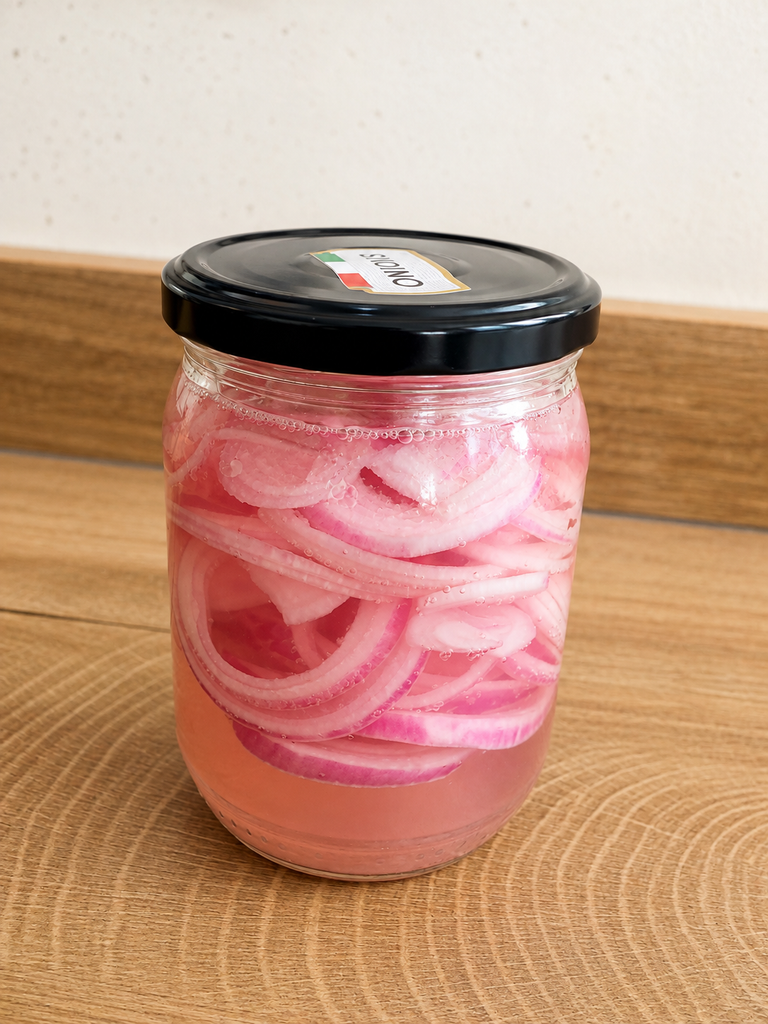
How to Make Fermented Red Onions
The classic version is wonderfully simple.
You only need:
Ingredients
- 1 large red onion, approximately 150–200 g
- 1–2 garlic cloves
- non-iodized salt
- filtered or chlorine-free water
- a clean glass fermentation jar
For a simple home fermentation, weighing the vegetables and using a measured salt concentration is preferable to relying on vague spoon measurements.
For this recipe, a 2% salt concentration based on the weight of the onions and water is an easy approach.
For example, if your onions and water together weigh 500 g, you would use approximately 10 g of salt.
Use a kitchen scale for the most consistent results.
Equipment
You don’t need a lot of equipment.
Ideally, have:
- a clean glass jar
- a kitchen scale
- a fermentation weight
- a lid or fermentation lid/airlock
A fermentation weight is particularly useful because the onions need to remain completely submerged in the brine.
Step 1: Prepare the Onions
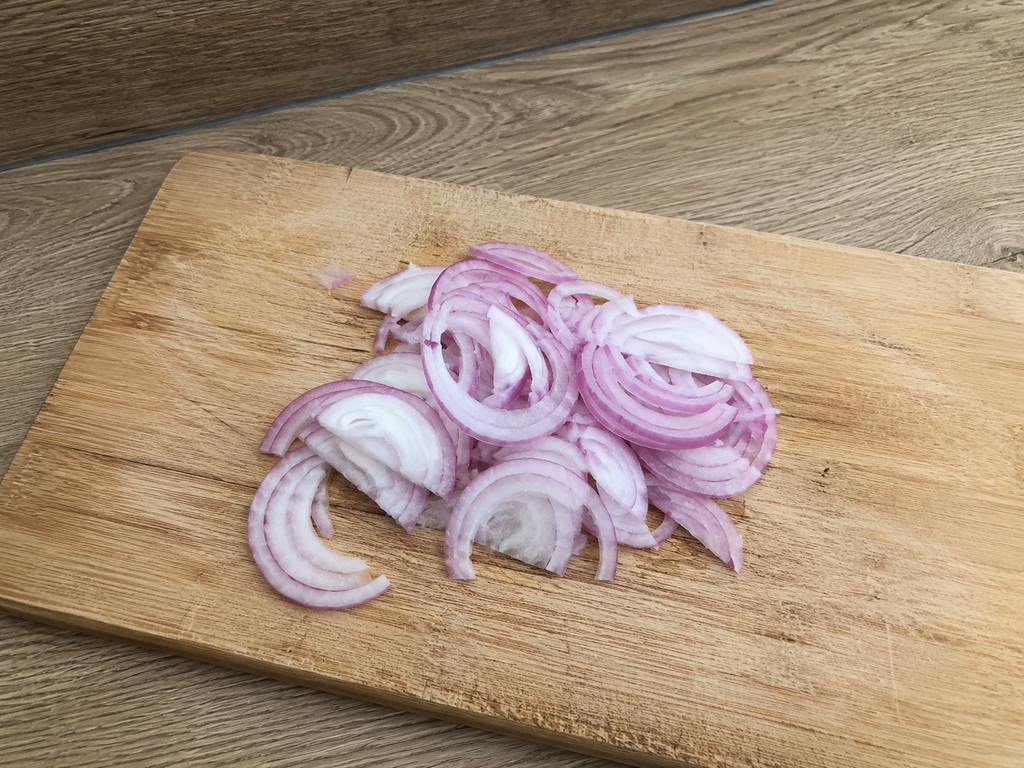
Peel the red onion and remove the root and stem ends.
Slice the onion into thin rings or half-moons.
Thin slices ferment relatively quickly and are also easy to use straight from the jar.
Peel the garlic cloves and leave them whole or lightly crush them.
Step 2: Pack the Jar
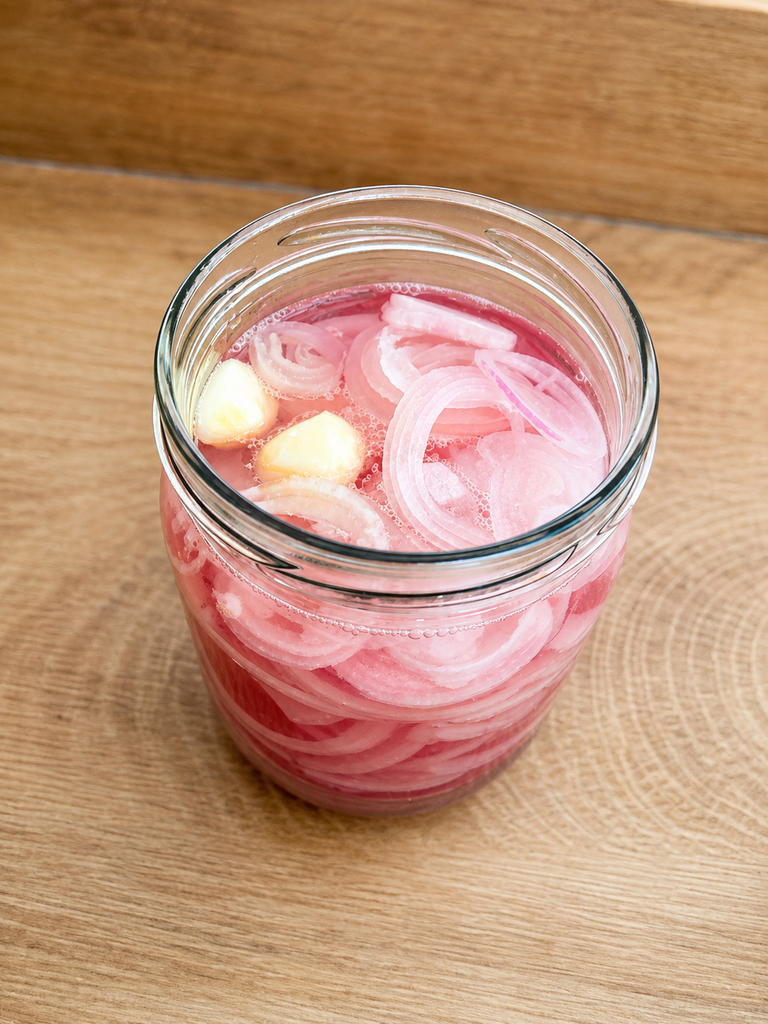
Place the sliced red onions into your clean glass jar.
Add the garlic cloves.
Press the onions down gently as you fill the jar.
Leave some space at the top because fermentation produces carbon dioxide.
Step 3: Make the Brine
Prepare your salt solution using the measured amount of salt and water.
Use non-iodized salt without unnecessary additives when possible. Water with high chlorine levels can interfere with fermentation, so filtered or otherwise suitable water is preferable.
Pour the brine over the onions until they are completely covered.
This is extremely important.
The onions should remain below the surface of the brine throughout fermentation.
Use a fermentation weight to keep them submerged.
Step 4: Let Nature Do the Work
Close the jar with a fermentation lid or another suitable lid that allows gas to escape safely.
Place the jar somewhere away from direct sunlight at a moderate room temperature.
You may notice tiny bubbles appearing after a day or two.
That is a good sign that fermentation is underway.
The exact fermentation time depends on temperature, the vegetables and your preferred flavor.
Rather than relying only on a specific number of days, look for a pleasantly sour aroma and flavor and, ideally, verify the pH with an appropriate food pH meter.
Research-based home fermentation guidance recommends monitoring acidity and reaching a pH of 4.6 or lower for fermented vegetables.
Step 5: Taste and Refrigerate
Once your onions have developed the level of sourness you like and the fermentation has progressed appropriately, transfer the jar to the refrigerator.
Cold temperatures greatly slow the fermentation process.
Always use clean utensils when taking onions from the jar.
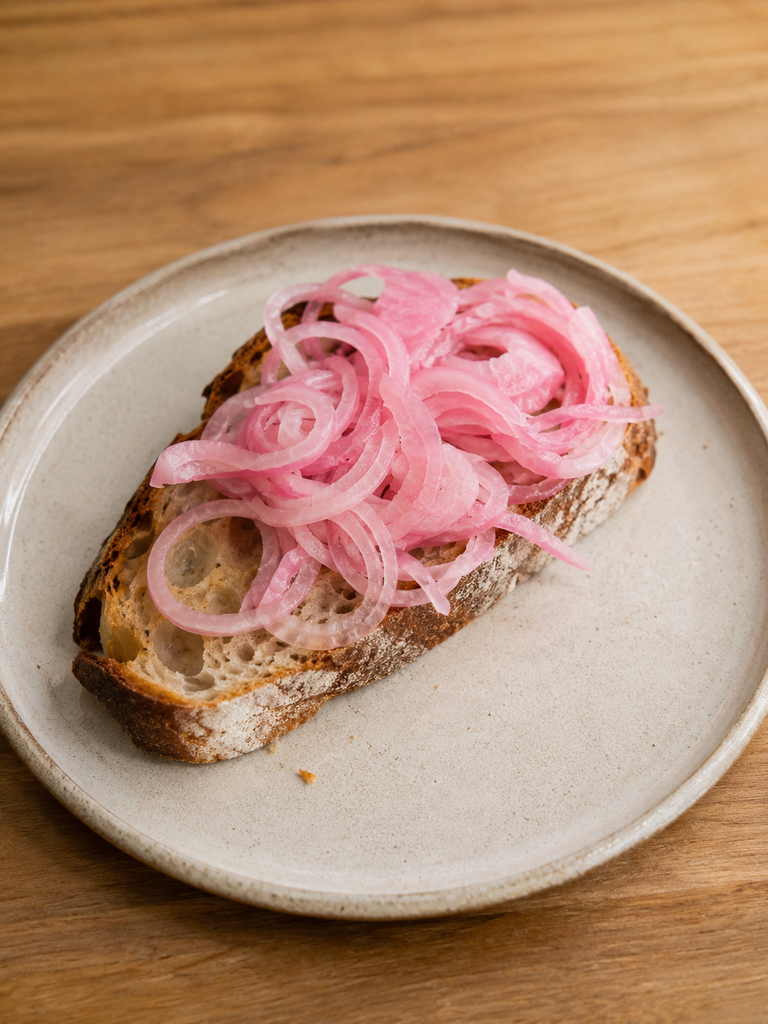
What Should Fermented Red Onions Taste Like?
The flavor should be pleasantly sour, slightly salty and savory.
The sharp raw-onion bite becomes softer and more rounded.
The onions should still have some texture, although they may become softer over time.
You may notice a little natural fizz when you first open the jar. That’s completely different from the rotten or unpleasant smell associated with spoilage.
Trust your senses.
If you see unusual mold, notice a foul or putrid smell, or have any doubts about the safety of the ferment, discard it rather than trying to rescue it.
The Best Red Onions for Fermentation
Almost any fresh red onion can work, but I particularly like firm, fresh onions with a strong color and good crunch.
Look for onions that are:
- firm and heavy for their size
- dry on the outside
- free from soft spots
- free from visible mold
- fresh rather than sprouting
Red onions are especially beautiful because their color develops into a vibrant pink-purple as they ferment.
You can also experiment with different varieties.
The flavor will vary depending on the onion, growing conditions and season.
Can You Ferment White or Yellow Onions?
Absolutely.
Red onions are my favorite because they are beautiful and slightly sweet, but white and yellow onions can also be fermented.
You may notice differences in:
- sweetness
- sharpness
- texture
- color
- fermentation speed
If you are making fermented onions for the first time, red onions are a wonderful place to start.
What Else Can You Add to Fermented Red Onions?
The simplest version is actually my favorite:
red onion + garlic + salt + water.
It has a clean flavor and works with almost everything.
But once you have mastered the basic recipe, there are many ways to change it.
Fermented Red Onions with Chili
Add one small fresh chili or a few chili flakes.
This gives the onions a little heat and makes them especially good with tacos, eggs, grilled vegetables and avocado.
Garlic and Black Pepper
Add a couple of whole black peppercorns together with the garlic.
The result is subtle but savory.
Rosemary
A small sprig of fresh rosemary gives the onions a Mediterranean character.
Thyme
Fresh thyme works beautifully with red onions and is especially good if you plan to serve them with roasted vegetables.
Dill
For a fresher, more pickle-like flavor, try fresh dill.
Coriander Seeds
A few coriander seeds add a citrusy, slightly floral note.
Ginger
A few thin slices of fresh ginger create a brighter, spicier ferment.
Chili + Garlic
This is one of my favorite combinations if you like bold flavors.
Use it for grain bowls, grilled meat, sandwiches or roasted vegetables.
What I Wouldn’t Add to the Basic Ferment
Keep the first batch simple.
Avoid throwing lots of ingredients into the jar simply because they sound healthy.
Every additional ingredient changes the environment inside the jar.
If you are new to fermentation, start with onions, garlic, salt and water.
Once you understand how the fermentation behaves, experiment with small batches.
How to Use Fermented Red Onions
This is where these onions really shine.
On avocado toast
Add a small handful on top of avocado toast with olive oil, salt and freshly ground pepper.
In salads
They are fantastic in green salads, tomato salads, cucumber salads and Mediterranean grain salads.
With eggs
Add them to scrambled eggs, omelets, boiled eggs or a breakfast bowl.
In sandwiches
They bring acidity and crunch to sandwiches and wraps.
With hummus
One of the easiest combinations: hummus, roasted vegetables, olive oil and fermented red onions.
On roasted vegetables
Roasted sweet potatoes, zucchini, eggplant or cauliflower become much more interesting with something sharp and acidic on top.
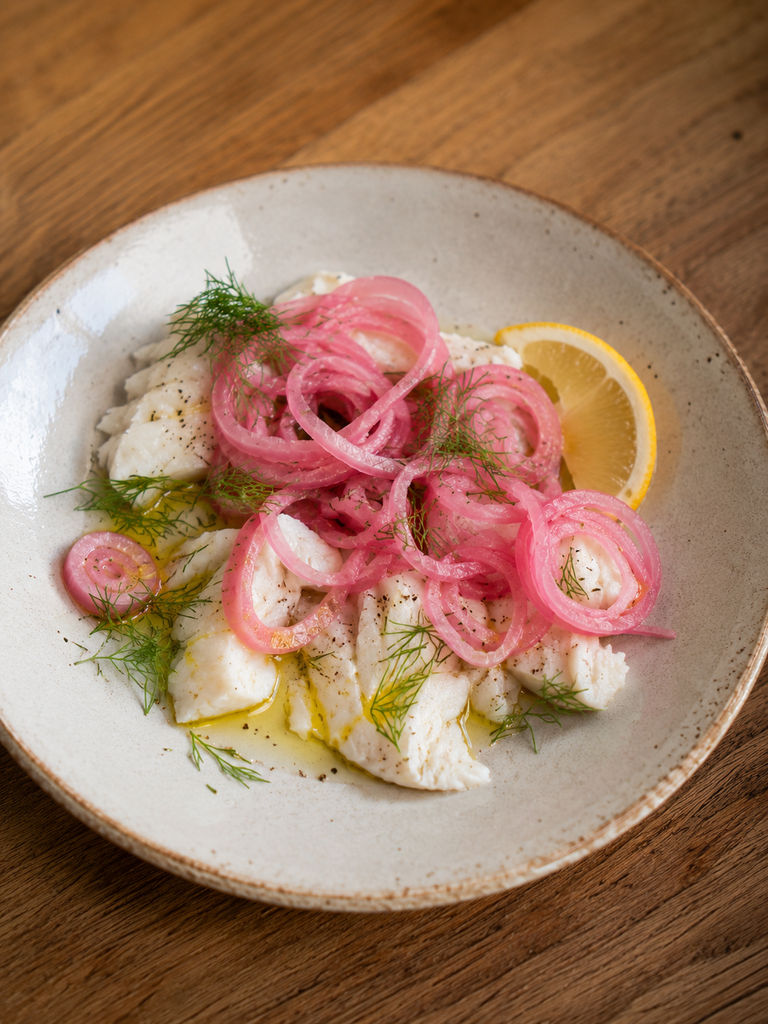
With grilled meat or fish
The acidity cuts through rich foods beautifully.
In grain bowls
Try quinoa, rice or couscous with roasted vegetables, chickpeas, avocado, herbs and fermented onions.
With Mediterranean dishes
They are particularly delicious with falafel, grilled vegetables, feta, hummus, olives and fresh herbs.
Fermented Red Onions vs. Pickled Red Onions
Although they look similar, they are made differently.
| Fermented Red Onions | Quick-Pickled Red Onions |
|---|---|
| Fermented by microorganisms | Acidified with vinegar |
| No vinegar required | Usually contains vinegar |
| Develop naturally sour flavor | Usually sour immediately |
| Takes several days | Can be ready in minutes |
| May contain living microorganisms | Depends on preparation |
| Flavor becomes more complex over time | Usually sharper and more predictable |
Neither method is necessarily „better.“
They are simply different.
If you need onions for dinner tonight, make quick-pickled onions.
If you enjoy traditional fermentation and want to experiment with naturally fermented foods, make fermented onions.
Are Fermented Red Onions Probiotic?
This is a common question.
The short answer is: not necessarily.
Fermented vegetables can contain living microorganisms, including lactic acid bacteria. However, the term „probiotic“ has a more specific scientific meaning.
A probiotic microorganism must be sufficiently characterized and shown to provide a health benefit when consumed in an appropriate amount.
Therefore, it is more accurate to say that properly fermented onions may contain live microorganisms rather than promising that they are a proven probiotic food.
This distinction is important because fermented foods are increasingly marketed as if every fermented product automatically provides proven probiotic benefits.
The science is more nuanced.
Do Fermented Onions Still Contain the Benefits of Raw Onions?
Fermentation doesn’t simply make a food „healthier.“
It changes it.
Some compounds may be broken down, while others may become more available or new compounds may be produced.
Research on lacto-fermented fruits and vegetables has found changes in microbial populations, organic acids, phenolic compounds and other bioactive substances.
So fermented onions should not be thought of as raw onions with extra benefits.
They are a different food with a different flavor, texture and microbial composition.
Are Fermented Red Onions Good for Gut Health?
They can be an interesting addition to a varied diet, but we should keep expectations realistic.
Fermented foods are being actively studied for their potential effects on the gastrointestinal system and gut microbiome. Some human studies suggest possible benefits, but the evidence varies considerably depending on the fermented food, the microorganisms involved and the individual consuming it.
There is currently no good reason to think that eating a spoonful of fermented onions will magically „heal your gut.“
Instead, think of them as one small part of a diverse diet containing vegetables, fruit, legumes, whole grains, nuts, seeds and other minimally processed foods.
Can I Eat Fermented Onions If I Have IBS?
This depends entirely on your individual tolerance.
Onions are naturally high in fructans, which are a FODMAP. For people with IBS, these carbohydrates can contribute to bloating, abdominal pain and other digestive symptoms.
Fermentation may alter the carbohydrate composition, but it should not be assumed that fermented onions are automatically low-FODMAP.
If you have IBS or have been advised to follow a low-FODMAP diet, introduce them carefully and follow the guidance of your dietitian or healthcare professional.
Frequently Asked Questions
How long do fermented red onions take?
The timing depends on temperature and the fermentation conditions. Rather than using the calendar alone, look for active fermentation, a pleasant sour flavor and, for food-safety purposes, verify the pH with an appropriate meter. A pH of 4.6 or below is the commonly used safety threshold for fermented vegetables.
Do I need vinegar?
No.
Traditional lacto-fermentation produces acidity naturally through the activity of lactic acid bacteria.
Do I need a fermentation starter?
No.
Fresh vegetables naturally carry microorganisms that can initiate fermentation.
Why do my onions turn pink?
Red onions naturally contain pigments that can change during fermentation. The result is often a beautiful bright pink or purple color.
Why are my onions bubbling?
Bubbles are a normal result of fermentation. Microorganisms produce carbon dioxide as they metabolize available carbohydrates.
Do the onions have to stay underwater?
Yes.
Keeping the vegetables submerged in the brine is an important part of proper fermentation because it creates the low-oxygen environment required for the intended fermentation process.
What if some onions float?
Use a fermentation weight or another appropriate method to keep the onions beneath the brine.
Can I use tap water?
It depends on your local water supply.
Chlorinated water can interfere with fermentation, so filtered or otherwise suitable water is preferable when needed.
Can I use regular table salt?
For consistent fermentation, non-iodized salt without unnecessary additives is generally preferred.
Can I use garlic?
Yes.
Garlic is a classic addition and pairs beautifully with red onions.
Can I add herbs?
Yes. Rosemary, thyme, dill, coriander seeds, peppercorns, chili and ginger are all interesting options.
How should I store fermented red onions?
Once the fermentation has progressed appropriately, keep the jar refrigerated. Refrigeration slows the fermentation considerably.
How long do fermented red onions last?
Storage life depends on the fermentation method, acidity, hygiene and refrigeration conditions. For home fermentation, keep them refrigerated and use clean utensils every time. If you notice mold, an unpleasant rotten smell or anything that makes you question the safety of the product, discard the entire batch.
Can I ferment onions without garlic?
Absolutely.
Garlic is completely optional.
In fact, if you want to keep the flavor very simple, red onion, salt and water are all you need.
Can I ferment other onions?
Yes.
Try yellow onions, white onions or shallots and compare the results.
Can I eat fermented onions every day?
For most healthy people, a small amount can easily be incorporated into a varied diet if tolerated.
You don’t need a large serving. A tablespoon or two is enough to add plenty of flavor.
If fermented foods are new to you, start small.
A Few Important Fermentation Safety Tips
Fermentation is simple, but it isn’t something to do completely casually.
For the best results:
- Start with fresh, good-quality vegetables.
- Wash your produce and use clean equipment.
- Use a reliable salt measurement rather than guessing.
- Keep the onions submerged beneath the brine.
- Use an appropriate fermentation lid or airlock where possible.
- Keep the ferment at a suitable temperature.
- Monitor the fermentation rather than relying solely on a fixed number of days.
- If possible, use a food-safe pH meter to verify that the ferment has reached pH 4.6 or below.
- Refrigerate once fermentation is complete.
- If anything looks or smells spoiled, discard it.
Home fermentation guidance emphasizes that correct salt concentration, submersion, temperature and acidity all matter. The production of sufficient acid is an important safety barrier against certain pathogens.
And one important rule:
When in doubt, throw it out.
The Simple Fermented Red Onion Recipe
If you want the shortest version to save for later, here it is:
Ingredients
- 1 large fresh red onion
- 1–2 garlic cloves
- filtered or suitable water
- non-iodized salt
Method
- Slice the red onion into thin rings or half-moons.
- Place the onions and garlic into a clean glass jar.
- Prepare a measured salt brine using approximately 2% salt by total weight of the onions and water.
- Pour the brine over the onions.
- Use a fermentation weight to keep everything completely submerged.
- Close with a suitable fermentation lid or airlock.
- Leave at a moderate room temperature away from direct sunlight.
- Watch for bubbling and developing acidity.
- Ideally check the pH with a food-safe pH meter and continue fermentation until it reaches 4.6 or below.
- Once sufficiently fermented, transfer to the refrigerator.
- Enjoy a small spoonful whenever your meal needs a little extra acidity and crunch.
Final Thoughts
I think fermented red onions are one of those recipes that perfectly demonstrates why homemade food doesn’t have to be complicated.
A humble onion, a little salt and some time can create something completely different.
They are colorful, crunchy, naturally tangy and incredibly versatile.
And while I wouldn’t call fermented onions a miracle food or promise that fermentation will solve digestive problems, they are a wonderful way to bring more fermented foods and plant variety into your kitchen.
Start with the simple version — red onions, garlic, salt and water.
Once you have a jar in your refrigerator, don’t be surprised if you start putting them on everything.
A little spoonful can be the difference between an ordinary meal and one that suddenly tastes fresh, bright and completely finished.