How to Grow Fresh Indoor Herbs All Year Round (No Garden or Balcony Required)
Are you tired of buying flimsy plastic-wrapped herb pots from the supermarket only to watch them wilt and die within three days? You are not alone. Millions of home cooks face the „supermarket herb curse,“ blaming themselves for a lack of a green thumb when the real culprit is a flawed commercial growing system.
The good news? You can enjoy an abundant, aromatic harvest of fresh culinary herbs 365 days a year—entirely on your kitchen windowsill. No garden, no balcony, and no prior gardening experience required.
This comprehensive guide covers everything you need to transform your windowsill into a thriving indoor kitchen herb garden, save money, and elevate your cooking permanently.
1. Why Supermarket Herb Pots Are Set Up to Fail
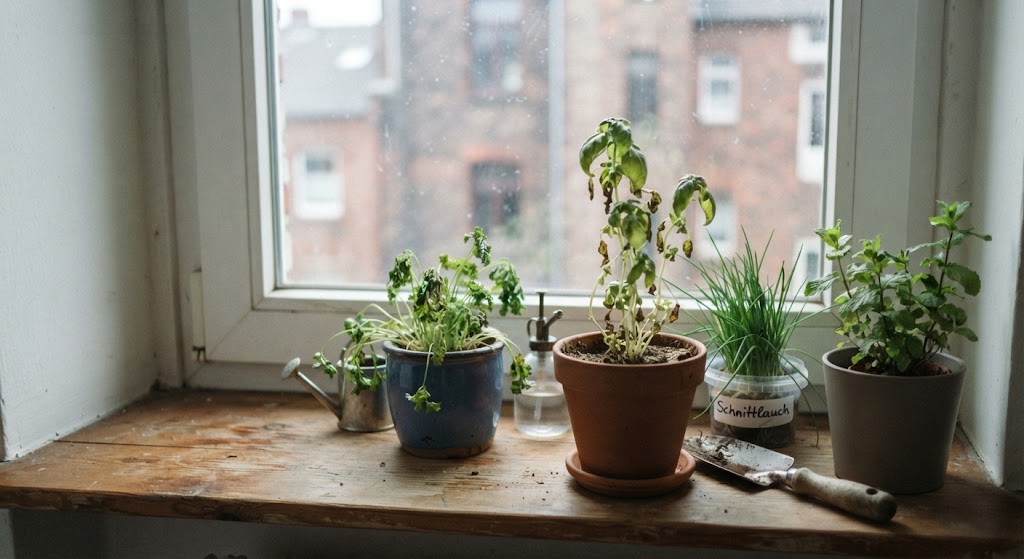
Before building your indoor oasis, it helps to understand why store-bought basil and parsley give up so fast.
Commercial growers squeeze hundreds of tiny seeds into a tiny pot to create a lush, attractive product fast. Once you bring that pot home, the roots are severely overcrowded, the soil is often nutrient-depleted peat, and your indoor air lacks the greenhouse humidity and industrial lighting the plants were raised under.
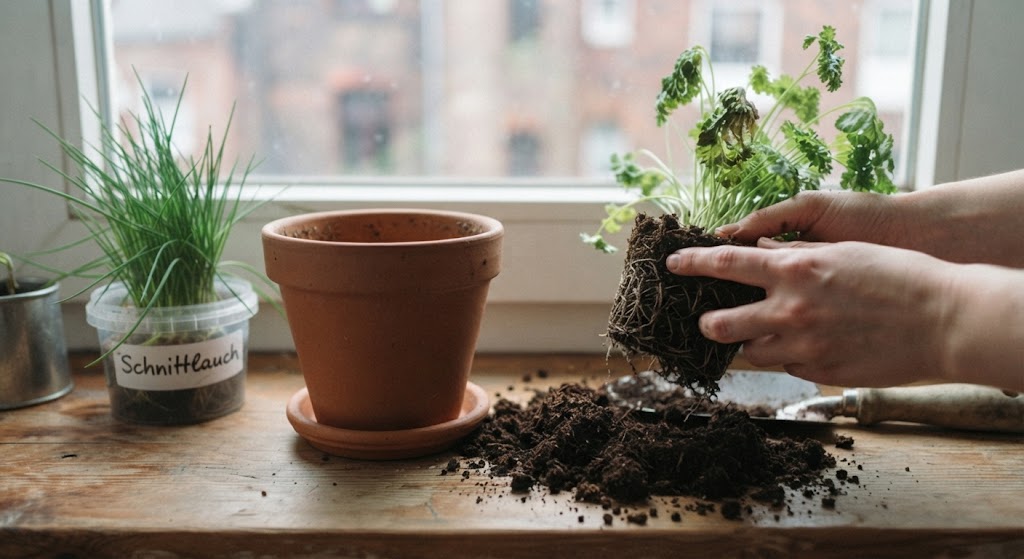
- The Fix: Stop treating supermarket pots as single permanent plants. As soon as you bring them home, either separate the tiny seedlings into individual pots with fresh organic soil or harvest them immediately and start fresh with proper indoor-adapted plants or seeds.
2. Choosing the Right Herbs for an Indoor Windowsill
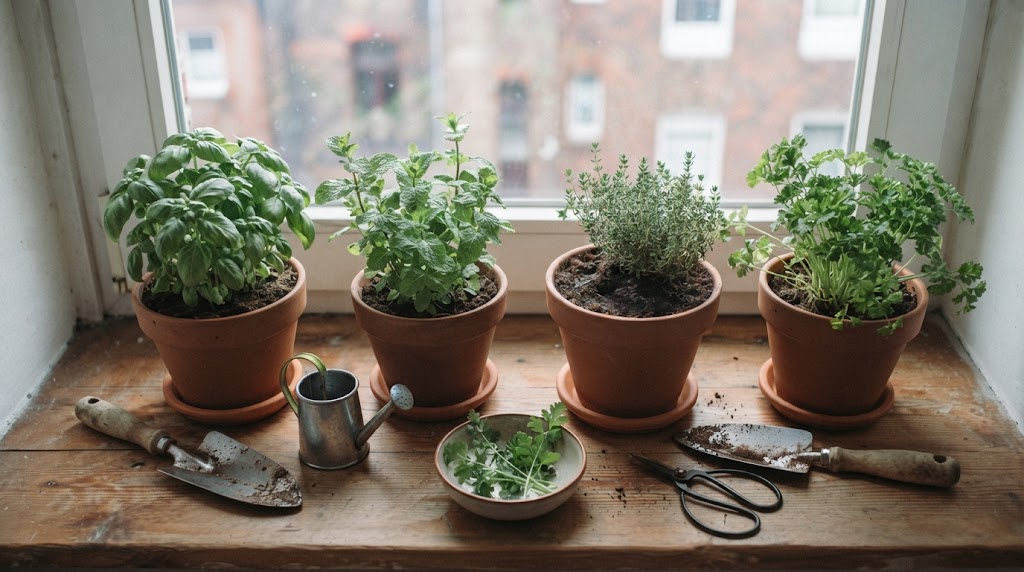
Not all herbs tolerate indoor living equally. Select varieties that adapt well to container growth and limited winter light.
The Reliable All-Year Performers
- Chives (Allium schoenprasum): Incredibly resilient. They bounce back quickly after every harvest and tolerate cooler kitchen spots.
- Mint (Mentha): Thrives almost anywhere. Pro tip: Always grow mint in its own separate pot, as its aggressive roots will choke out other herbs.
- Thyme (Thymus vulgaris): Loves sunny windows and requires very little water, making it low-maintenance.
- Oregano (Origanum vulgare): Similar to thyme, it prefers drier soil and plenty of ambient light.
The High-Light Lovers
- Basil (Ocimum basilicum): Demands warmth and at least six hours of direct sunlight. If your kitchen lacks a south-facing window, consider a small LED grow light.
- Parsley (Petroselinum crispum): Slow to germinate from seed, but exceptionally productive once established on a bright windowsill.
3. Step-by-Step Guide: Setting Up Your Windowsill Herb Garden
Creating a successful indoor garden requires balancing soil, light, and hydration. Follow these steps for guaranteed success:
Step 1: Select the Right Pots and Soil
- Containers: Always use pots with drainage holes and a saucer underneath. Root rot from standing water is the number one killer of indoor herbs.
- Soil: Ditch heavy garden soil or cheap potting mix. Use a lightweight, high-quality organic herb and vegetable potting mix that retains moisture without compacting.
Step 2: Master the Art of Lighting
Light is the ultimate limiting factor, especially during autumn and winter.
- South-Facing Windows: The holy grail for herbs like basil and rosemary.
- East/West Windows: Great for mint, chives, and parsley.
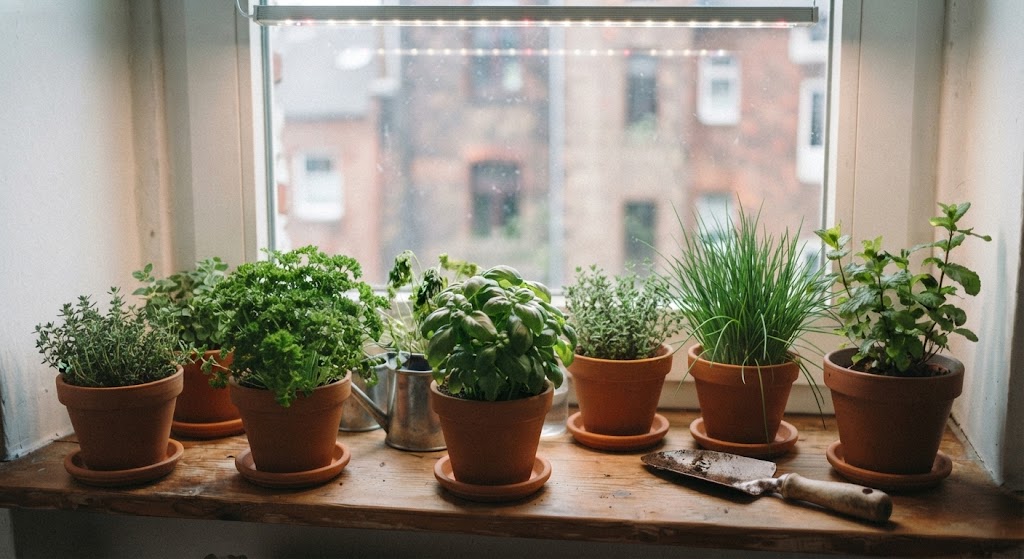
- The Winter Hack: If natural light drops, supplement with an affordable LED grow light bulb or a sleek desktop plant light strip mounted above your window frame for 6 to 8 hours a day.
Step 3: Watering with Precision
Indoor plants dry out differently than outdoor beds.
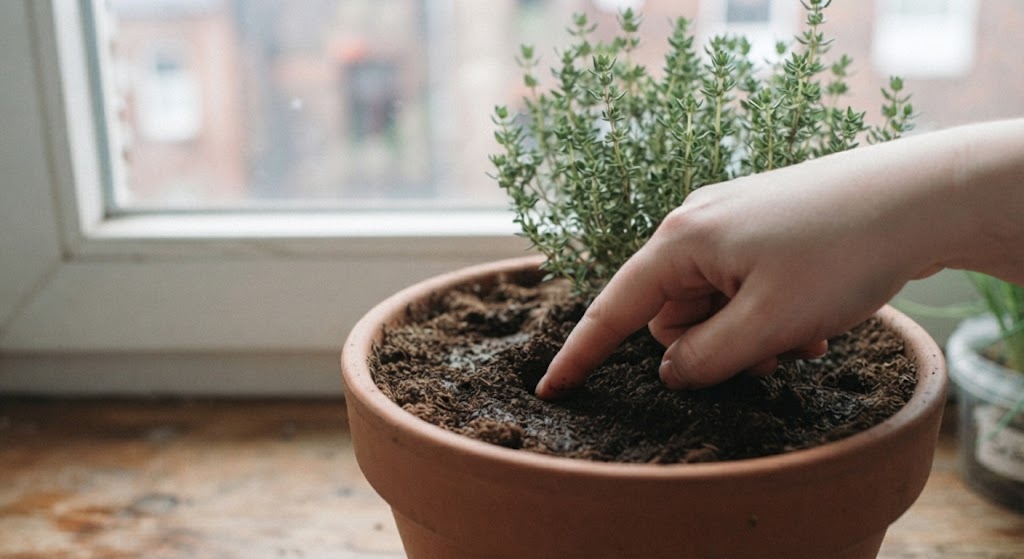
- The Finger Test: Push your index finger about an inch into the soil. If it feels dry, water thoroughly until it drains out the bottom. If it feels damp, wait a few days.
- Avoid Shallow Sips: Daily splashes of water only wet the top layer and starve deeper roots. Water deeply, then let the soil dry out slightly between waterings.
4. Advanced Hacks for Unlimited Fresh Herbs
Maximize your indoor harvest and minimize your grocery spending with these pro strategies:
- Propagate from Kitchen Scraps: Don’t throw away herb stems from cooking. Place fresh stems of mint, basil, or rosemary in a glass of water on your windowsill. Within 2 to 3 weeks, robust white roots will sprout, ready to be planted in soil.
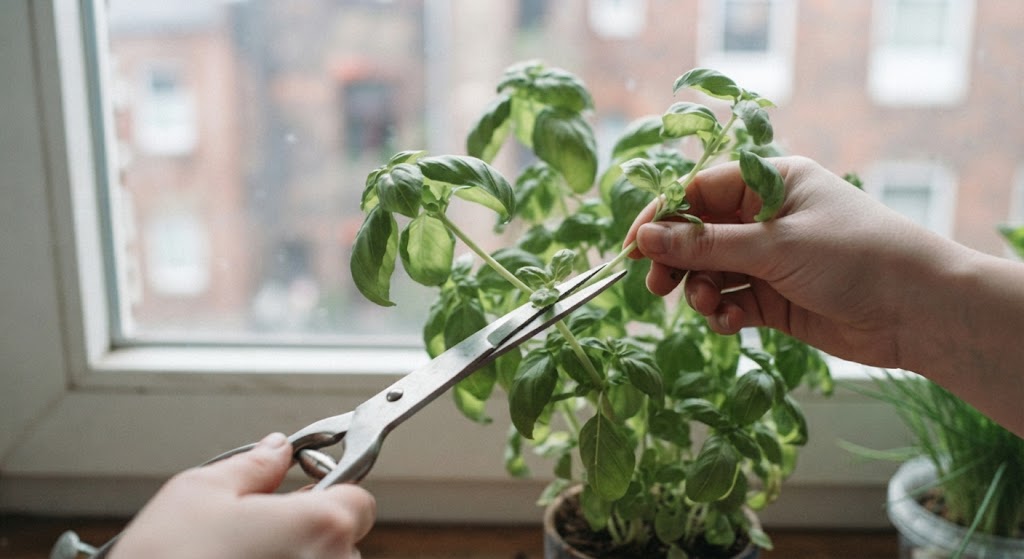
- Harvest Correctly: Never pluck individual leaves from the top. Instead, pinch or cut entire stems just above a leaf node or branching point. This stimulates the plant to branch out, becoming bushier and yielding twice as much next time.
- Rotate Weekly: Indoor light comes from one direction (the window). Rotate your pots 90 degrees every week to ensure even, balanced growth instead of leaning, lanky stems.
5. Troubleshooting: Dealing with Pests Naturally
Indoor herb gardens can occasionally attract pests due to still air and warm indoor heating. Here is how to keep your plants healthy without harsh chemicals:
- Fungus Gnats (Trauermücken): These tiny black flies love damp soil. The Fix: Let the top 2 inches of soil dry out completely between waterings, as larvae cannot survive in dry earth. You can also use yellow sticky traps (Gelbsticker) near the base of the pots or water with a natural biological solution containing Bacillus thuringiensis israelensis (mosquito dunks/nematodes).
- Spider Mites & Aphids: Often appear if the air is too dry and stagnant. The Fix: Mist your herbs regularly (especially humidity-loving herbs like basil) or gently wipe down stems with a cloth dipped in mild, soapy water. Boosting air circulation with a small fan nearby also prevents outbreaks.
6. Frequently Asked Questions (FAQ)
What is the absolute best soil for indoor kitchen herbs?
A lightweight, organic potting mix formulated specifically for herbs or vegetables is ideal. Avoid dense garden soil, which compacts easily indoors and suffocates roots.
Do I need a south-facing window to grow indoor herbs?
Not necessarily! While south-facing windows are best for sun-lovers like basil and rosemary, herbs like mint, chives, and parsley thrive nicely on east- or west-facing windows. For north-facing kitchens, an inexpensive LED grow light will bridge the gap.
Why do my indoor herbs get so tall and leggy?
Leggy growth is almost always a sign of insufficient light. The plant is stretching („reaching“) to find a light source. Move them to a brighter window or supplement with an artificial grow light, and remember to prune them back to encourage dense, bushy growth.
Say Goodbye to Plastic Packaging Forever
Growing your own herbs on the windowsill is a rewarding, cost-effective way to bring nature into your home kitchen. Not only will your dishes taste significantly fresher, but you will also reduce single-use plastic waste and enjoy the therapeutic benefits of tending to living plants every day.
What is your absolute favorite herb to cook with, and which one are you going to plant on your windowsill first?